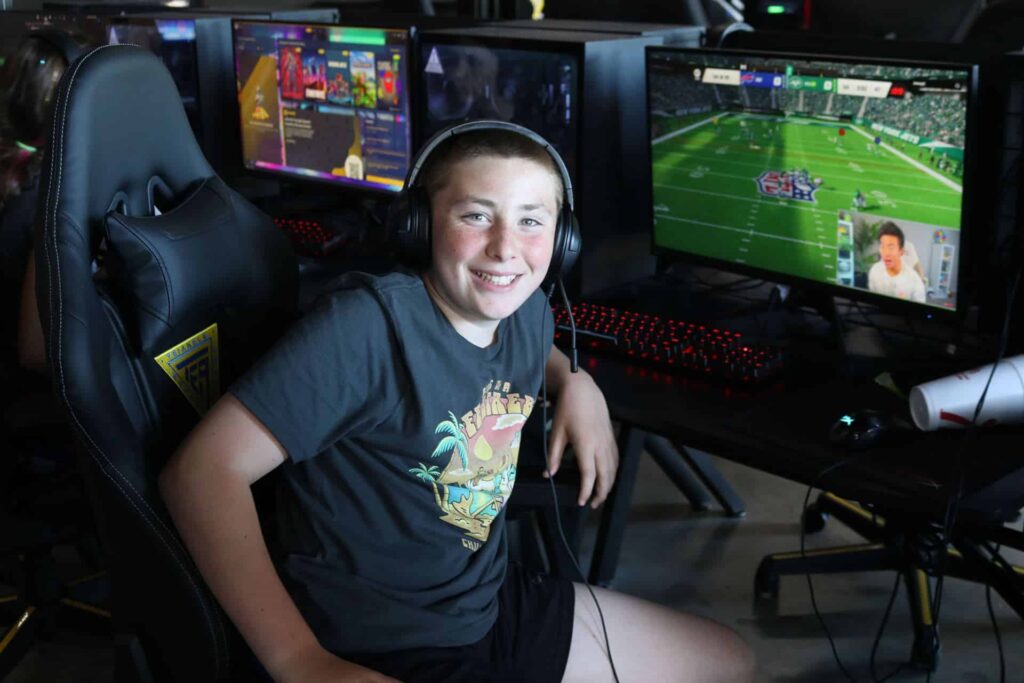
For many parents, esports is still a new and sometimes confusing concept. You may understand that your child loves video games, but the idea of gaming as a structured, skill-building activity—or even a career path—can feel unfamiliar. That’s why at North Carolina Esports Academy, we dedicate time to educating parents through resources like our What Is Esports? page and by sharing insights from trusted sources.
One great example is the book Beyond the Screen: A Parent’s Guide to Supporting Their Child’s Gaming Journey. Written by a parent who has firsthand experience with both the excitement and uncertainty that come with raising a gamer, it explores common concerns and how to approach them in a healthy, informed way.
Here are three of the key takeaways for parents:
1. Setting Healthy Boundaries
Like any activity, gaming can become unhealthy if it’s done excessively or without balance. The key is to create structure and expectations.
At NC Esports Academy, we teach players the importance of warm-up and cool-down routines and encourage regular breaks. Parents can support this by setting clear rules such as:
- Limiting total daily screen time
- Ensuring schoolwork and chores are completed before gaming
- Requiring physical activity before or between gaming sessions
This helps kids develop self-discipline while keeping gaming fun and balanced.
2. Maintaining Safety Online
Online safety is one of the biggest concerns for parents—and rightfully so. Fortunately, most games and consoles now offer parental controls that can limit communication, block certain content, and monitor activity.
As children grow, they should also learn digital responsibility—understanding why it’s unsafe to share personal information and how to handle interactions with strangers online. At the Academy, we reinforce this by teaching players to treat online spaces with the same respect and awareness they would in person.
3. Exploring Career Paths and Life Skills
Not every child will become a professional gamer—and that’s okay. Esports opens the door to many other career opportunities and valuable life lessons.
Gaming can inspire interest in fields like:
- Game design and development
- Cybersecurity
- Artificial intelligence
- Digital media and content creation
At the same time, esports teaches teamwork, collaboration, communication, and consistency—the same traits youth gain from traditional sports. Whether it’s working together in Minecraft lessons or competing as a duo in Fortnite, players are constantly developing transferable skills they can carry into any career.
Final Thoughts
Supporting your child’s interest in esports doesn’t mean you have to understand every game they play. It means being open to learning alongside them. Encourage balance, promote safety, and look for opportunities where their passion for gaming can lead to growth, creativity, and real-world skills.
When done right, esports isn’t just about gaming, it is about helping kids build confidence, discipline, and a sense of purpose both on and off the screen.